
The Golden Retriever as a gun dog
The Golden Retriever was developed in Scotland in the 1800s to retrieve shot waterfowl and upland birds on land and water. Goldens are known for a soft mouth and a strong wish to work with their handler, which makes them quick to learn the steps of retriever training.
- 4.9 12 Google reviews
- Training since 2002
- Qualified at an AKC Master National
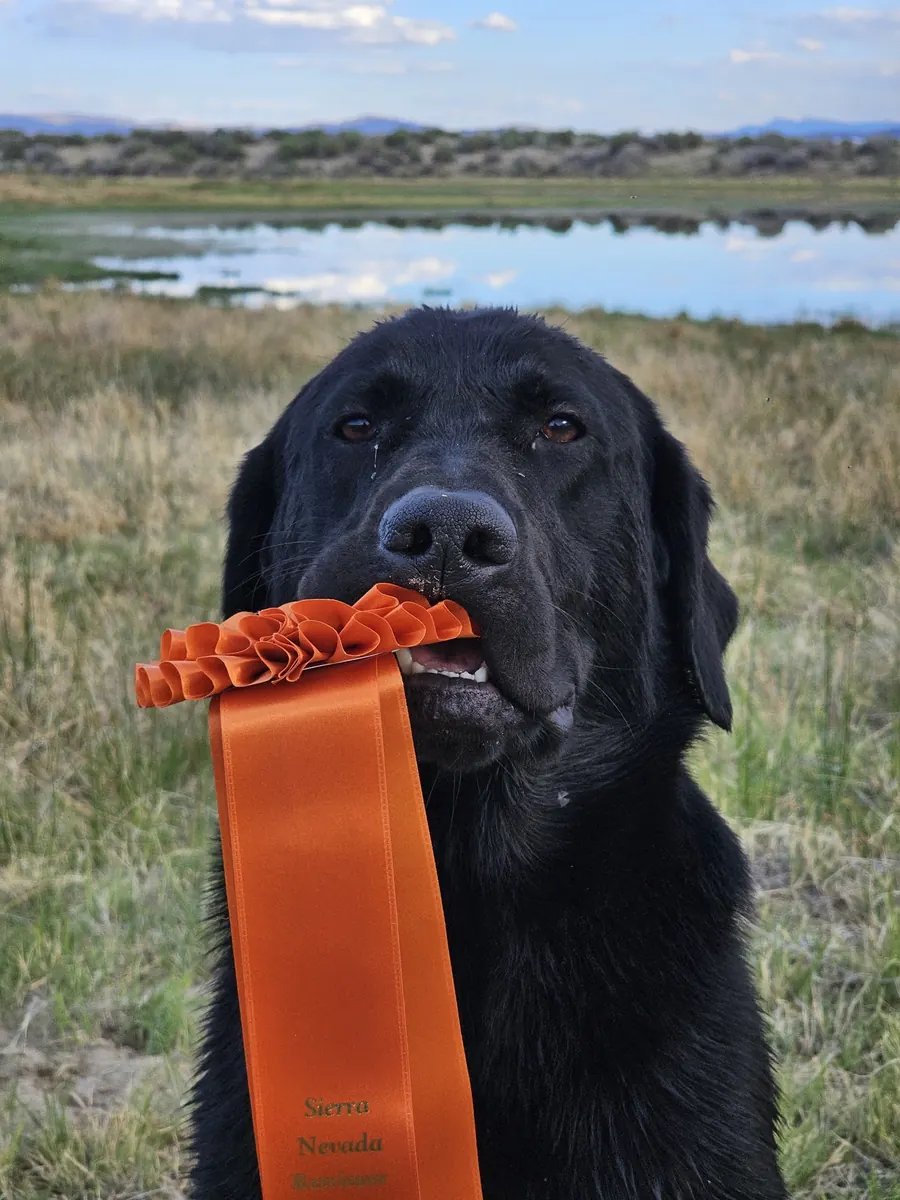
At a glance
Golden Retriever at a glance
- Origin
- Scotland, 19th centuryAKC breed standard
- AKC group
- SportingAKC
- Typical weight
- 55-75 lbsAKC breed standard
- Hunting style
- Retriever (waterfowl and upland)AKC
A golden at your feet in the blind is a calm, attentive partner. This page explains the breed's working roots, what to expect when you train one, and where to start.
Bred for the long retrieve
According to the AKC, the Golden was developed in the Scottish Highlands to retrieve game from land and water. The goal was a dog that could mark a falling bird and deliver it gently. That gentleness shows up in the soft mouth hunters value, a dog that carries a bird without marking it.
A golden's coat is dense and water-repellent with feathering on the chest, legs and tail. Plan on brushing after a day in a marsh, since burrs and seeds love that feathering.
What makes a golden's training different
Goldens tend to be sensitive and people-focused. Many handlers find that a golden responds well to clear, consistent, patient teaching and loses confidence if sessions turn tense. That fits the philosophy Richard states for his own work: balance, encouraging the hunting drive and desire in the dog, coupled with a team player attitude.
The practical result is a dog that learns the basics quickly and wants to repeat them. The work is often in building independence, so a pleasant dog that likes to stay close learns to carry a line on long marks and blind retrieves.
A typical start for a golden
- Introduce birds and water in short, happy sessions
- Teach sit, come and heel as the foundation for everything after
- Build delivery to hand with a bumper, then a bird
- Move to singles, then multiple marks
- Add lining and handling for blind retrieves, then steadiness
A day in a California blind
A golden is often the quiet dog at the end of the bench. In a Delta blind or a rice-field pit, that calm shows up as a dog that sits, watches the sky and waits for the send. The work to get there is steadiness, which comes from practice at home with birds and a launcher before it is asked for in the field. The line manners guide shows the sort of habits that carry over.
Field lines, show lines and the home dog
Golden Retriever breeders produce dogs for the show ring, the home and the field. A hunting golden often comes from field-bred stock, though plenty of family goldens also retrieve. Richard works with dogs from top-level field trial and hunt test dogs to everyday hunting dogs and home companions, so bring the dog you have.
A golden pup starts with Puppy Camp, then the Basic Waterfowl Program; a dog with the basics done can move to the Advanced Waterfowl Program. Handlers who want to run tests can add handler lessons.
Sources (3)
- American Kennel Club: akc.org/dog-breeds/golden-retriever/ (checked October 27, 2026)
- Golden Retriever Club of America: grca.org/ (checked October 27, 2026)
- Hastings Island Hunting Preserve: hihp.com/royal-gun-dogs-dog-training/ (checked October 27, 2026)
Matching program
Your trainer
Richard Gebhart has trained dogs professionally since 2002, learned the Rex Carr method for Retriever Basics under Billy Sargenti, and has run and qualified at an AKC Master National.
Meet RichardAre goldens good duck dogs?
Yes. Goldens retrieve ducks and geese from water and land, and many hunters like their steady, calm manner in the blind.
Do goldens need an e-collar?
That depends on the dog and the handler. Read e-collar conditioning and talk with Richard about what fits your dog.
Can a golden run AKC hunt tests?
Yes. Goldens are eligible in AKC retriever hunt tests, beginning with Junior Hunter. See AKC Junior Hunter.
Can a family golden learn to hunt?
Often yes. Ask Richard about your dog's age, drive and what you hunt.
Book a consult
Get your dog ready for next season.
Richard books by phone. Call, text, or leave your details and he will call you back.
(530) 341-4496- 4.9 12 Google reviews
- Training since 2002