
Hunt test day: what to expect and bring
A hunt test weekend starts with a handlers' meeting, then each dog runs its retrieves in turn while other handlers wait nearby. Bring your entry confirmation, water for you and your dog, and clothes for the weather.
- 4.9 12 Google reviews
- Training since 2002
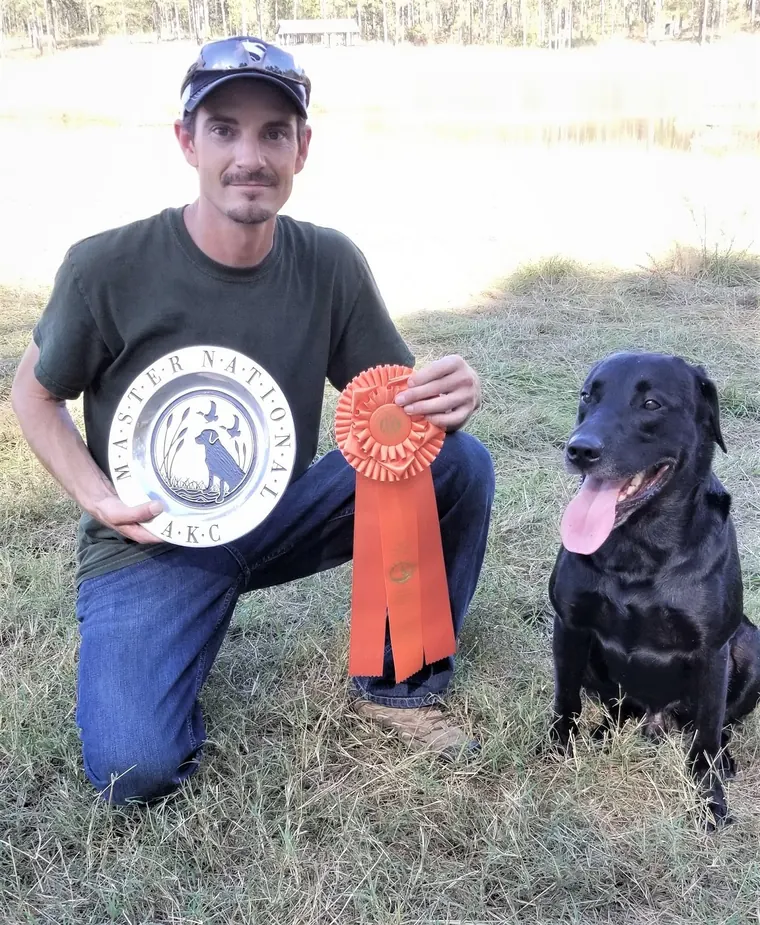
- Qualified at an AKC Master National
First-time handlers often wonder what happens between the truck and the line. The days are friendly and predictable, and clubs are glad to see new faces. This page covers the usual flow, and the host club's premium list is the final word on its own event.
Before you leave home
Confirm your entry with the host club, check the start time and know where the grounds are. Many California grounds are rural, so load directions before you lose cell service. Pack the dog's registration information, a crate or kennel, and a fresh water bowl.
- Entry confirmation and any paperwork the club sent
- A folding chair and layers for sun, wind or rain
- Water and food for you and the dog
- A leash, a slip lead, and towels for water work
- A whistle and lanyard if your dog works to one
At the grounds
Expect a handlers' meeting early in the day. Judges explain how the tests are set up and answer questions. Your running order comes from the club, and dogs in other series may wait while yours runs. Keep your dog calm and out of the way while other dogs work.
Watching a few dogs before yours teaches more than anything you can read. Where the club allows it, ask other handlers how they approach the line.
When it is your turn
You walk your dog to the line, wait for the judge's signal and send the dog when the test calls for it. Judges score marking, style, perseverance and trainability. The pass rule for AKC levels is explained on the Junior Hunter page.
Missing a series is common, even for seasoned teams, and the day is meant to teach. Many handlers take notes and bring the same dog back after more training. If you want a coach beside you, handler lessons help prepare for the line.
After the test
Thank the judges and the volunteers, who give their weekends so dogs can run. Ask for the judges' comments if the club offers them, and write down what your dog did well. That list becomes your training plan for the next month.
Keeping your dog comfortable
Hunt tests can run long, and weather in California ranges from frost to heat. Give your dog shade and fresh water between series, keep the crate somewhere quiet, and warm up with a few easy retrieves rather than a full practice session. A relaxed dog that has eaten lightly and rested usually runs better than one that has been drilled all morning.
Sources (3)
- American Kennel Club: akc.org/sports/retrievers/hunting-tests/join/ (checked October 27, 2026)
- Ducks Unlimited: ducks.org/hunting/retriever-training/retrievers-a-beginners-guide-to-hunt-tests (checked October 27, 2026)
- American Kennel Club: images.akc.org/pdf/rulebooks/RHTRET.pdf (checked October 27, 2026)
Your trainer
Richard Gebhart has trained dogs professionally since 2002, learned the Rex Carr method for Retriever Basics under Billy Sargenti, and has run and qualified at an AKC Master National.
Meet RichardDo I need special gear?
Check the premium list. Most handlers bring a leash, a whistle and towels.
Can I watch a test before entering?
Often yes. Contact the host club, since most welcome spectators.
What if my dog does not pass a series?
It happens to everyone, and the judges' comments show what to work on.
Book a consult
Get your dog ready for next season.
Richard books by phone. Call, text, or leave your details and he will call you back.
(530) 341-4496- 4.9 12 Google reviews
- Training since 2002