
The Labrador Retriever as a gun dog
The Labrador Retriever is a water retriever from Newfoundland and the most common duck dog in North America. A Lab's training path with Richard runs from Puppy Camp to the Basic Waterfowl Program and then the Advanced Waterfowl Program, with AKC hunt tests as an option.
- 4.9 12 Google reviews
- Training since 2002
- Qualified at an AKC Master National
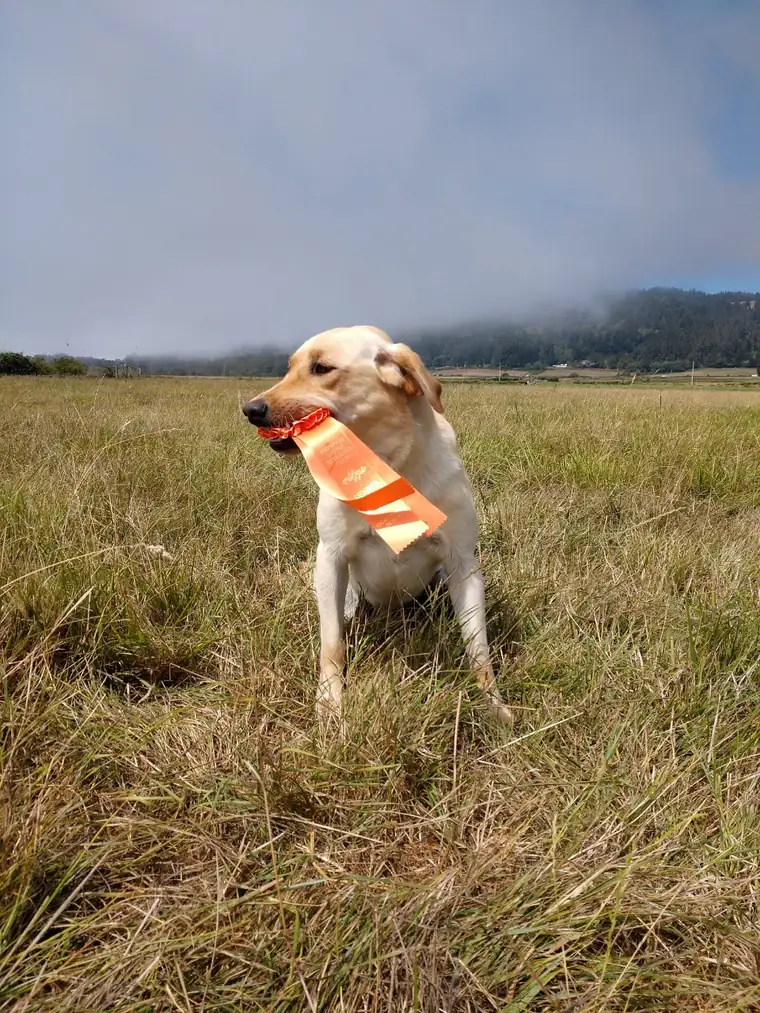
At a glance
Labrador Retriever at a glance
- Origin
- Newfoundland, developed in BritainAKC breed standard
- AKC group
- SportingAKC
- Typical weight
- 55-80 lbsAKC breed standard
- Hunting style
- Retriever (waterfowl and upland)AKC
Labs are the dog most Delta duck hunters picture when they say retriever. This page covers where the breed came from, what that means in a blind or a rice field, and how a Lab is usually started.
Why hunters choose Labs
Labs were bred to work cold water beside fishermen and hunters, and they still bring that water love, a soft mouth and an eagerness to please. In the Delta that means a dog that sits in a blind, marks birds over tules and swims retrieves in moving water.
The AKC standard describes a short, dense, weather-resistant coat and a thick tapering tail the dog uses like a rudder in the water. Those are working features, and they explain why so many field dogs are black, yellow or chocolate Labs of every build.
How a Lab is usually started
Most Lab owners begin with a puppy and the sequence that works for any retriever. The early weeks are about birds, water and manners, not pressure. The dog learns to sit, come and heel, to carry a bumper happily and to deliver it to hand.
Retriever basics comes next. Richard learned the Rex Carr method for retriever basics under Billy Sargenti while working with field trial retrievers, and he has trained dogs professionally since 2002. From there the dog moves to marks, then blind retrieves, then the control a duck blind demands.
- Puppy work: birds, water, manners
- Basic Waterfowl Program: obedience, force fetch, e-collar conditioning, hunting scenarios
- Advanced Waterfowl Program: steadiness in the blind, hand signals
- Advanced drills: Big T, wagon wheel, lining, diversions, cold blinds
- Optional: AKC Junior, Senior and Master Hunter tests
What Lab handlers run into
The common themes are drive and energy. A young Lab wants to retrieve everything, which is a gift, and the training job is to channel it so the dog waits for the send instead of leaving early. Steadiness at the line and calm in the blind are the usual goals; see the calm dog in the duck blind guide.
Lab owners also ask about family dogs. Many Labs hunt on weekends and live in the house the rest of the week, and Richard works with dogs across that range, from top-level field trial and hunt test dogs to everyday hunting dogs and home companions.
Which Royal Gun Dogs programs fit a Lab
A Lab pup starts with Puppy Camp at 5 to 7 months, then the Basic Waterfowl Program (10 to 16 weeks) and, for owners who want more, the Advanced Waterfowl Program (4 to 12 weeks). Hunt test goals are worked into those programs and into handler lessons, which teach you to run your own dog. board-and-train is how Labs from all over California get trained at Hastings Island in Rio Vista.
Sources (3)
- American Kennel Club: akc.org/dog-breeds/labrador-retriever/ (checked October 27, 2026)
- American Kennel Club: akc.org/sports/retrievers/hunting-tests/join/ (checked October 27, 2026)
- Hastings Island Hunting Preserve: hihp.com/royal-gun-dogs-dog-training/ (checked October 27, 2026)
Matching program
Your trainer
Richard Gebhart has trained dogs professionally since 2002, learned the Rex Carr method for Retriever Basics under Billy Sargenti, and has run and qualified at an AKC Master National.
Meet RichardAt what age can a Lab run an AKC hunt test?
AKC requires an eligible, registered dog at least 6 months old. The Basic Waterfowl Program builds the skills a Junior test asks for.
Is a field-bred Lab different from a show Lab?
Breeders often select for different traits, with field lines favoring drive and athleticism. Either can hunt, so ask Richard about your dog and your goals.
Do Labs make good upland dogs too?
Yes, many hunt pheasant and chukar as flushing retrievers. A Lab that works close to the gun does the job well.
When should a Lab start training?
Light puppy work can begin early. Read when to start a hunting puppy.
Book a consult
Get your dog ready for next season.
Richard books by phone. Call, text, or leave your details and he will call you back.
(530) 341-4496- 4.9 12 Google reviews
- Training since 2002